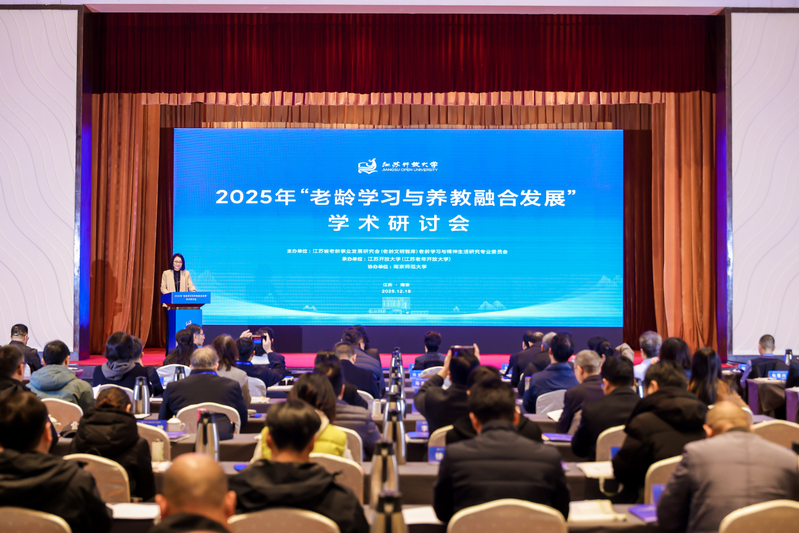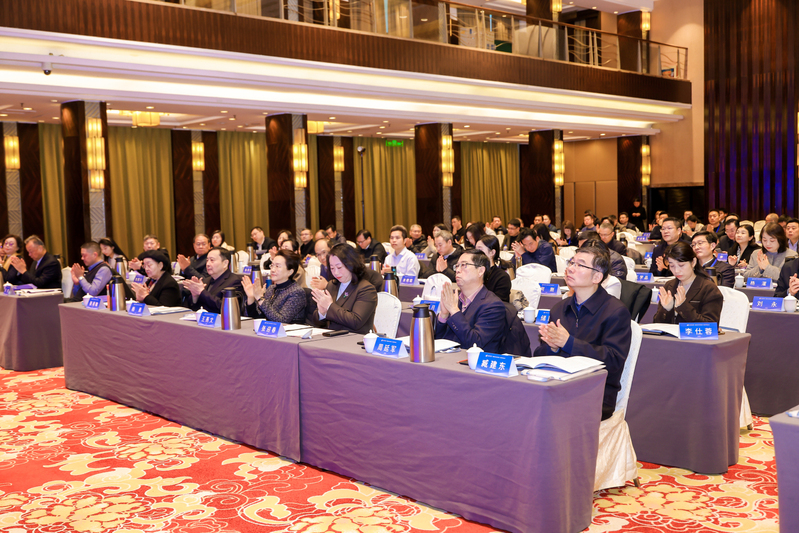
On December 18, the academic conference on "Senior Learning and Education-Care Intergration" was held in Nanjing. The event was hosted by the Committee on Senior Learning and Spiritual Life Research of the Jiangsu Aging Development Research Association (Aging Development Think Tank), organized by Jiangsu Open University (Jiangsu Open University for the Elderly), and co-organized by Nanjing Normal University. It brought together nearly 200 experts, scholars, and practitioners from research institutions, university senior learning centers, model senior universities, open universities, and leading health and care enterprises.
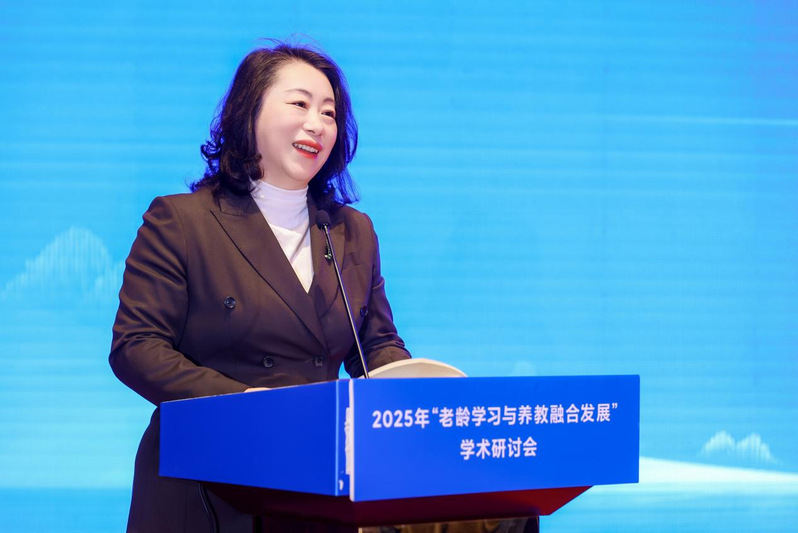
In her address, JSOU President Zhang Yingchun emphasized that, in the context of a deeply aging population, "senior learning" and "education-care integration" are key pathways to promoting active aging and advancing the high-quality development of education for the elderly. She noted that JSOU will adhere to the principles of "openness, pragmatism, and digital intelligence innovation", guided by the "five transformations" of ecological, digital, skill-oriented, distinctive, and efficient development. The university aims to build a collaborative senior education community, create a smart learning ecosystem, cultivate "silver-haired artisans" to empower older adults, and develop replicable models to enrich the lives of seniors.
Experts at the conference highlighted the evolving role of senior education from "recreational" to "empowerment-oriented", underscoring "education-care integration" as a crucial approach. Discussions emphasized integrating education with health promotion, social engagement, and value realization, transitioning from separated learning and care models to systems that "promote wellness through learning and nurture health through education", thereby providing sustained momentum for active aging.
The conference also featured insights into regional models, such as Guangdong's "Bay Area model" that combines smart resource-sharing platforms with community-based education and discipline integration. Experts further discussed the development of community-based "education-health-care" service models and corporate-led cultural and learning initiatives designed to enhance seniors' well-being and engagement.
Two parallel forums focused on "innovative senior learning" and "ecological development in education for the elderly". Discussions centered on policy coordination, model innovation, industry-education integration, and inter-generational inclusion. Key topics included empowering the silver economy, building collaborative curricula between universities and communities, promoting mental well-being through intergenerational programs, applying smart technologies, establishing regional learning networks, and incentivizing social sector participation—all contributing to an age-friendly and sustainable senior education ecosystem.
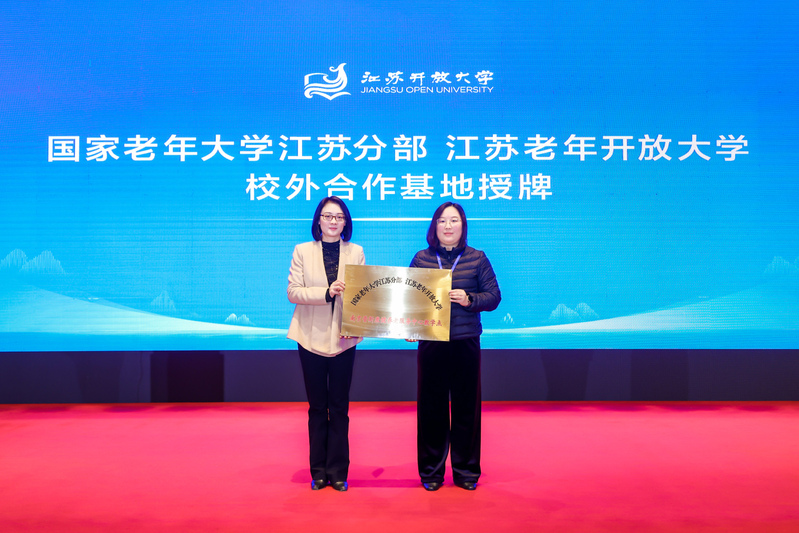
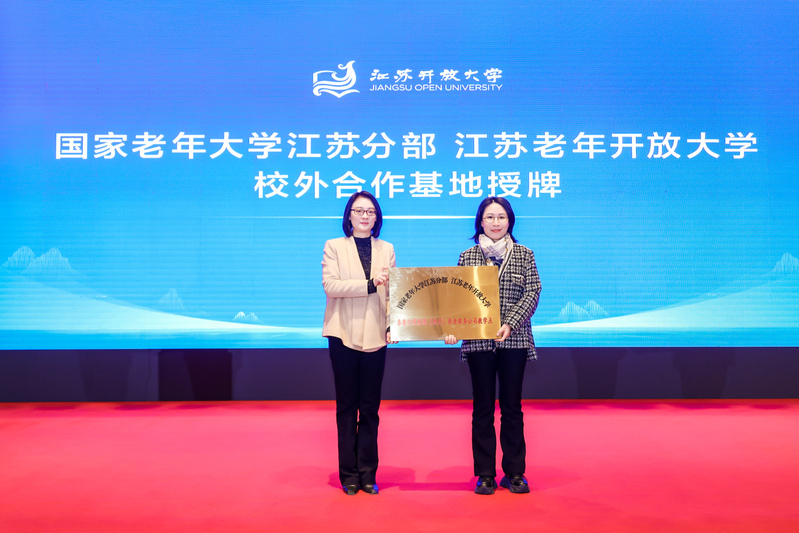
During the conference, two off-campus teaching sites were officially established in collaboration with Nanjing Push Kangjian Senior Service Center and Taikang Community, marking a practical step in expanding the senior education network and exploring integrated "institution + education" models.
The event concluded with a shared commitment to building an inclusive, collaborative, and resilient ecosystem for senior education, contributing to the response to population aging and the advancement of a learning society.